In a world where speed and quality in food and pharmaceutical processing and storage are essential, freezing tunnels have revolutionized various industries by enabling rapid freezing conditions. But do you know how these systems work and what factors should be considered when choosing one?
Join us in this article from Tabadol Gostar Booran to take a comprehensive look at freezing tunnels and their advantages.
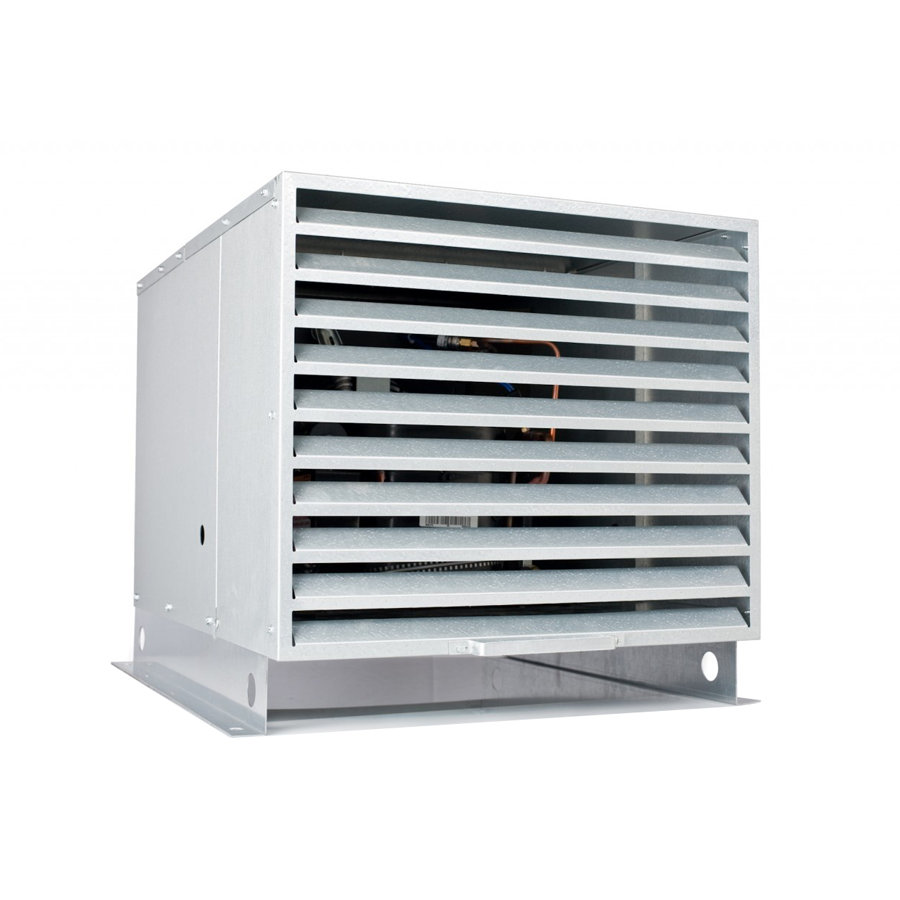
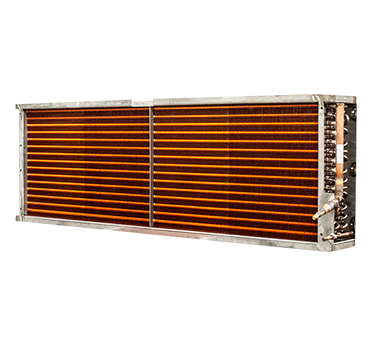
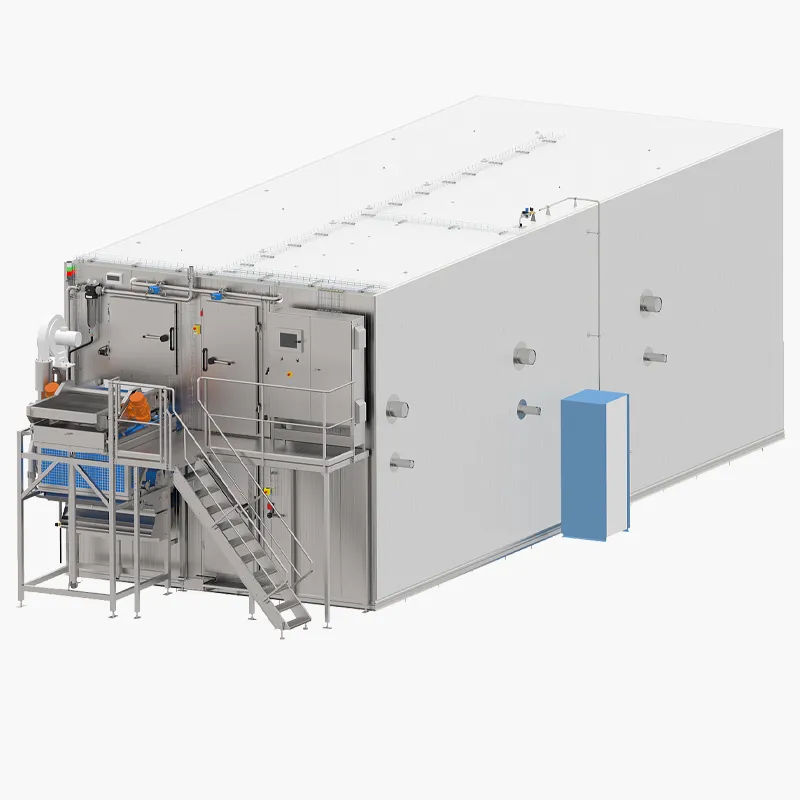
A freezing tunnel is a specialized and advanced system designed for rapid freezing of various materials, especially food and pharmaceutical products. This technology creates an environment with very low temperatures and strong air circulation to freeze products in the shortest possible time. The main goal of a freezing tunnel is to reduce freezing time while preserving the quality, flavor, and nutritional value of the product.
In conventional freezing, ice formation happens slowly, and large ice crystals may develop within the material’s structure. These crystals damage the cellular texture of the food, altering its taste, texture, and nutritional value. In contrast, freezing tunnels use intense and uniform cold to form small, homogeneous ice crystals that help preserve the original properties of the product.
Freezing tunnels are designed in two main types:
The linear freezing tunnel is one of the most common designs due to its simplicity and efficiency. In this type, products move along a conveyor belt in a straight line and are exposed to very low temperatures along the way. This design allows for fast and uniform freezing of the products.
One of the key advantages of linear freezing tunnels is their low construction and maintenance cost. Their simple, linear design, use of standard parts, and relatively straightforward manufacturing process reduce both initial and operational expenses. Additionally, due to the simple structure, maintenance and repair are easier and less costly, making them a great choice for small and medium-sized businesses seeking cost-effective solutions.
The smooth and uncomplicated surfaces of linear freezing tunnels make cleaning and sanitization extremely easy. This feature is particularly crucial in the food industry, where hygiene is a top priority. Regular cleaning prevents bacterial growth and contamination, helping maintain product quality and safety.
Linear freezing tunnels are highly flexible due to their modular and simple design. This means they can easily be adapted or upgraded according to production needs. For instance, adding or removing modules can increase or decrease capacity, or allow freezing of different types of products. This flexibility makes linear freezing tunnels ideal for industries with changing production requirements.
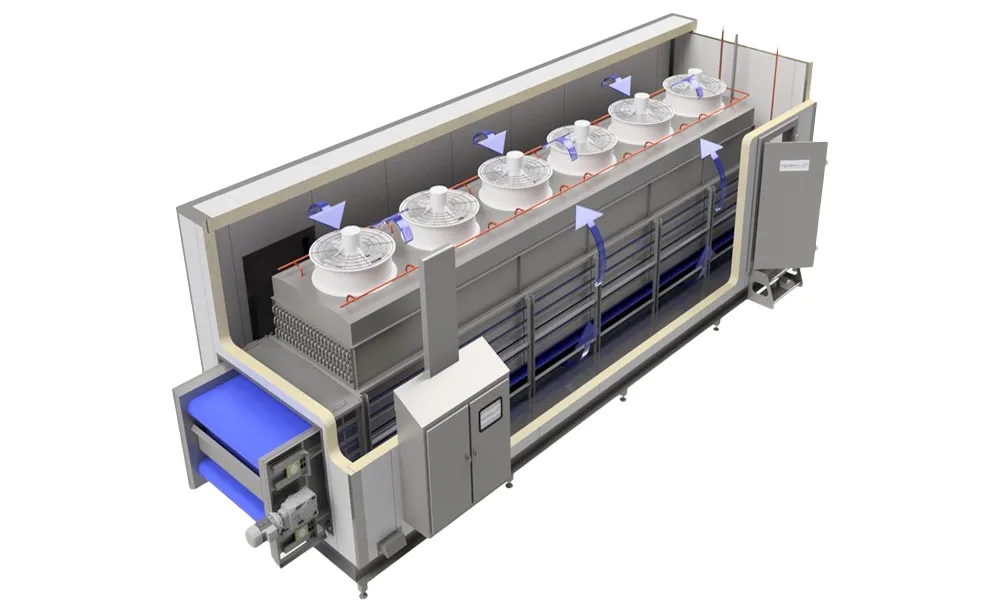
The spiral freezing tunnel is one of the most advanced and efficient freezing systems used in the food industry. Thanks to its unique spiral design, it provides a fast and uniform freezing process for various products. In this tunnel, products move on a spiral conveyor belt and are exposed to extremely cold air throughout the process.
This design ensures that products freeze gradually and evenly, preventing the formation of large ice crystals inside the tissue.
One of the most prominent advantages of spiral freezing tunnels is their ability to freeze products quickly and uniformly. The spiral structure and optimized airflow ensure that the products are completely and evenly exposed to cold temperatures, resulting in fast and thorough freezing. This feature is especially beneficial for products that require rapid freezing, such as meat and fish.
Fast and uniform freezing in spiral tunnels helps maintain the product’s natural quality, flavor, color, and texture. By minimizing exposure time and preventing the formation of large ice crystals, these tunnels protect the cellular integrity and nutritional value of products — which is particularly vital for delicate items like fruits and vegetables.
Another significant benefit of spiral freezing tunnels is reduced product loss. Rapid and even freezing minimizes the risk of freezer burn or incomplete freezing. Moreover, the hygienic design and precise temperature and humidity control systems prevent microbial growth and spoilage.
The spiral configuration of these tunnels allows optimal space usage. Compared to linear freezing tunnels, spiral models require less floor area, making them ideal for factories and production units with limited space.
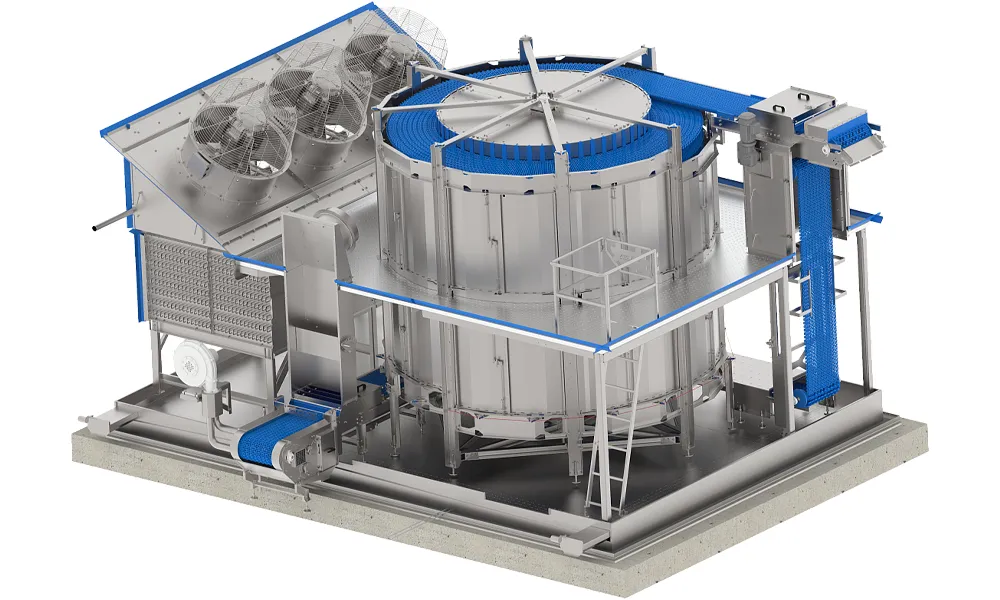
Spiral freezing tunnels are typically fully automated, requiring minimal human intervention. Advanced control systems and various sensors allow precise monitoring and regulation of the freezing process, enhancing productivity, reducing human errors, and lowering operating costs.
Freezing tunnels are categorized based on their dimensions and capacity. Selecting the right type depends on production needs, available space, and the volume of material to be frozen per cycle.
Below are the main types of freezing tunnels by size:
This type is designed for small and medium-sized production units with limited output. They are compact and suitable for local factories or specialized production lines where large space is not available.
These tunnels are designed for medium-scale factories and are capable of freezing a larger volume of products in each cycle. With a balanced combination of size and capacity, they are suitable for production lines with diverse product ranges.
Large industrial freezing tunnels are primarily designed for large-scale factories with mass production needs. They offer very high capacity and are typically engineered for energy efficiency and faster freezing performance.
Read More:
These types of tunnels are designed and manufactured based on specific customer requirements. Their size, capacity, and features are fully customizable, making them suitable for various industrial applications.
The choice of freezing tunnel depends on several factors, including product type, production volume, product dimensions, and desired quality. Below are the main types of freezing tunnels categorized by product:
Freezing tunnels for meat products are usually larger and equipped with precise temperature and humidity control systems. They must be capable of quickly lowering the product’s temperature to prevent the formation of large ice crystals. Additionally, the ventilation system should be designed to prevent bacterial growth and product contamination.
Chicken freezing tunnels are designed to reduce the temperature of poultry products in the shortest possible time, preventing the formation of large ice crystals that can damage the meat’s texture. These tunnels are equipped with advanced temperature and humidity control systems to preserve the freshness and quality of the chicken. Optimized air circulation and ventilation prevent bacterial growth and contamination, ensuring full compliance with hygiene standards.
Read More:
Seafood products such as fish and shrimp require special freezing conditions due to their delicate structure. These tunnels typically feature precise temperature control systems and shorter freezing times. They are also designed to prevent oxidation while maintaining the flavor and texture of the seafood.
Fruits and vegetables, due to their wide variety and differing properties, require specialized freezing tunnels. Some need rapid freezing at very low temperatures because of their delicate structure, while others can be frozen more slowly at higher temperatures. These tunnels are usually equipped with precise humidity control systems to prevent product dehydration.
Ready and semi-prepared foods also require specialized freezing tunnels. These tunnels must ensure quick and uniform freezing to maintain the quality and taste of the products. They are also designed to prevent contamination and fully comply with food safety standards.
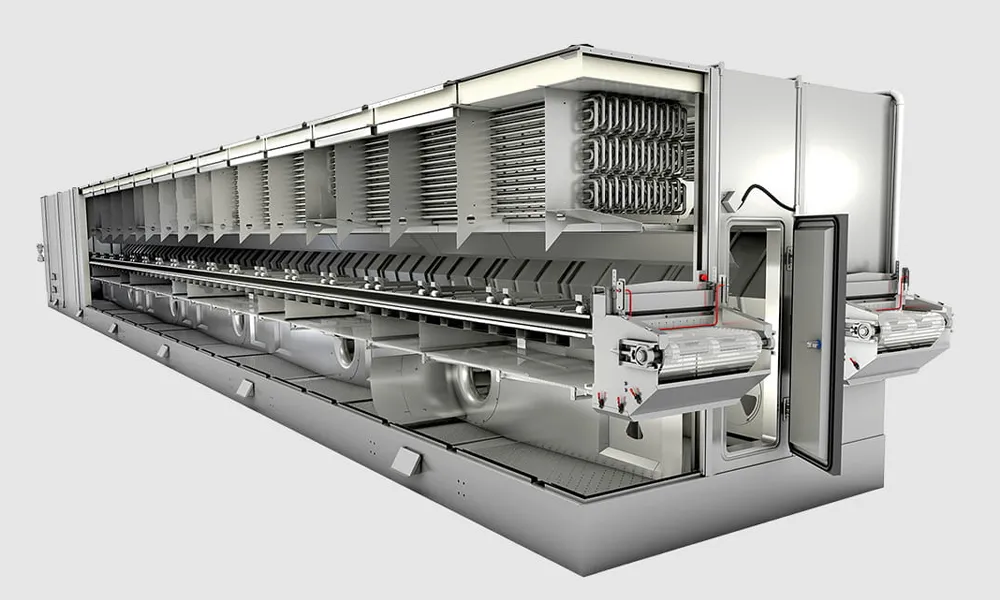
Pharmaceutical products are extremely sensitive and require highly controlled freezing environments. Pharmaceutical freezing tunnels feature precise temperature and humidity control systems as well as air filtration systems to prevent contamination during freezing.
One of the most important factors to consider when selecting or purchasing a freezing tunnel is its dimensions. The size directly affects production capacity, the type of products that can be frozen, and the required installation space.
Freezing tunnels are manufactured in a wide range of sizes—from small tabletop models to large industrial units. Therefore, before ordering or purchasing a prebuilt freezing tunnel, it is crucial to assess your required capacity, product type, desired production speed, and available installation space.
When choosing the dimensions of a freezing tunnel, you should pay attention to the following factors:
One of the most important factors when selecting the dimensions of a freezing tunnel is its production capacity. Generally, the larger the tunnel, the higher its production capacity will be.
For example, if you operate a large food processing factory producing high volumes daily, you will need a large freezing tunnel with high capacity. Conversely, for a small store or restaurant, a smaller-capacity tunnel will be sufficient.
The type of product to be frozen also affects the choice of tunnel size. Products such as meat, poultry, and fish are larger and heavier, requiring larger freezing tunnels for complete and uniform freezing. On the other hand, smaller items like fruits and vegetables can be efficiently frozen in smaller tunnels.
If production speed is a key concern, a larger tunnel with a stronger conveyor system should be selected. Larger freezing tunnels often have multiple conveyor belts operating in parallel, allowing greater volumes of product to be frozen in a shorter time.
The available space for installation is another key factor in determining tunnel dimensions. Before purchasing a freezing tunnel, accurately measure the installation area. Choosing a tunnel that doesn’t fit the available space can cause significant operational issues.
The temperature inside a freezing tunnel is one of the most crucial factors affecting freezing speed and quality. It must be low enough to form ice crystals rapidly within the product and prevent their growth; otherwise, large ice crystals may damage the product’s cellular structure and reduce its quality.
The temperature range of freezing tunnels typically varies between -18°C and -40°C. The exact temperature depends on the type, size, and thickness of the product as well as the desired freezing speed.
For instance, thin products with large surface areas freeze faster and at higher temperatures, while thicker and denser items require lower temperatures and longer freezing times.
The price of a freezing tunnel depends on multiple factors, each playing a key role in determining the final cost of this industrial equipment. As one of the essential machines used in food, pharmaceutical, and agricultural industries for rapid freezing, its price can vary widely depending on model and features. Below are the main factors influencing the price of freezing tunnels:
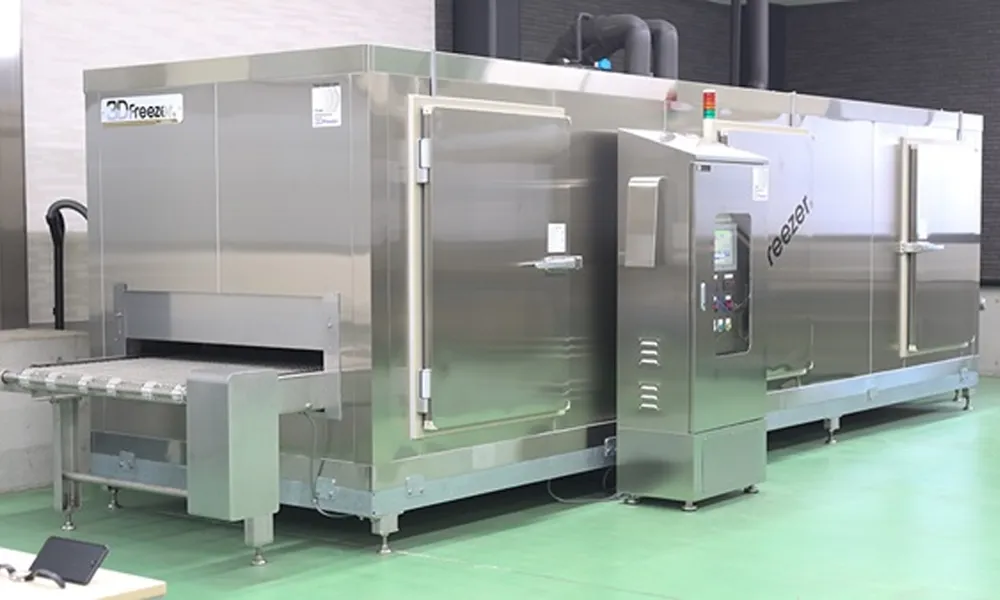
One of the main price-determining factors is the tunnel’s capacity. Freezing tunnels are designed in various capacities, from a few hundred kilograms to several tons per hour. The higher the capacity, the higher the price — due to the need for more powerful components and greater energy consumption.
The cooling system is another major factor in pricing. Freezing tunnels may use ammonia or Freon-based refrigeration systems. Ammonia systems typically offer higher efficiency and lower energy consumption but have higher upfront costs. Freon systems, on the other hand, are cheaper initially but may have higher operating expenses.
The tunnel’s size depends on production volume and product type. Larger units are more expensive. Additionally, custom-designed models that require special configurations generally cost more.
Freezing tunnels are typically constructed from stainless steel, aluminum, or galvanized sheets. Using food-grade stainless steel increases cost but enhances durability, corrosion resistance, and hygiene standards.
Proper insulation is critical to prevent energy loss and maintain low temperatures. Some tunnels use high-density polyurethane insulation, which raises the initial cost but reduces long-term energy consumption and improves efficiency.
Freezing tunnels equipped with advanced or smart control systems generally have higher prices. Some units include PLC controllers, touch displays, and automatic temperature adjustment systems that optimize performance and reduce human intervention, improving cost efficiency in the long term.
The manufacturer’s brand is another key pricing factor. Well-known brands often use higher-quality components, advanced technologies, and offer better after-sales service — all contributing to higher prices. European and American-made freezing tunnels are typically more expensive than Asian models.
In addition to the device’s price, installation and commissioning costs must also be considered. Some tunnels require specialized setup and additional components such as compressors, condensers, and temperature control systems, which increase overall expenses.
Tabadol Gostar Booran is one of Iran’s leading manufacturers of freezing tunnels, producing high-quality, high-performance units using the latest technologies and premium materials.
For more information about products and services, visit their website or contact them via the phone numbers listed below.
Our expert consultants at Tabadol Gostar Booran are ready to help you choose the best freezing tunnel for your business needs.
The freezing tunnel is an essential technology in the food and pharmaceutical industries, providing ultra-low temperatures for rapid freezing while preserving product quality. Selecting the right tunnel type, size, and temperature depends on product type, production volume, and desired quality.
By choosing the proper freezing tunnel, you can extend product shelf life, reach wider markets, and boost your business growth. For professional consultation and high-quality freezing tunnel purchases, contact the specialists at Tabadol Gostar Booran.
If you need consultation or wish to start a new project, contact us using the form below. Our support team is proud to assist you with all your needs.
Answers to the most common questions our experts at Tabadol Gostar Booran receive:
Product type, production capacity, available space, budget, and required temperature are among the most important factors that determine the choice of freezing tunnel type.
The main advantages of using freezing tunnels include preserving food quality and texture, extending product shelf life, reducing waste, achieving fast and uniform freezing, and enabling the freezing of various products.
No, each type of food product requires specific freezing conditions. Some products, due to their structure or composition, are not suitable for freezing in tunnels.
Accurately calculating the price of a freezing tunnel requires detailed evaluation of technical specifications and project requirements. Manufacturers such as Tabadol Gostar Booran provide a customized price quote based on client information. The cost typically includes raw materials, construction, assembly, transportation, and installation.
With over two decades of continuous and successful activity in the refrigeration industry, Tabadol Gostar Booran is recognized as one of the leading manufacturers and suppliers of refrigeration machinery and equipment in Iran and the Middle East.
Head Office: Tehran, Keshavarz Blvd, between Jamalzadeh and Kargar Streets, No. 310, 4th floor, Unit 9
Factory Address: Tehran, Shamsabad Industrial Zone, Azadi Blvd, Narges 4 Alley, No. 11
Phone: +98 21 66429698 / +98 21 66429699
Fax: +98 21 66429698
Email: Tabadolgostar@gmail.com
All rights reserved for the Tabadol Gostar Booran website. 2025